

Waste treatment: incineration, co‑incineration, or a combination of both?
Release date:
2017-11-06
On December 21, 2016, President Xi Jinping pointed out at the 14th meeting of the Central Financial and Economic Leading Group that universally implementing a waste-sorting system is vital to improving the living environment of more than 1.3 billion people and to ensuring that waste is reduced, recycled, and treated in an environmentally sound manner. It is necessary to accelerate the establishment of a waste-management system encompassing sorted disposal, collection, transportation, and treatment, and to develop a waste-sorting regime grounded in the rule of law, driven by the government, supported by public participation, coordinated between urban and rural areas, and tailored to local conditions, with the aim of expanding the coverage of such a system.
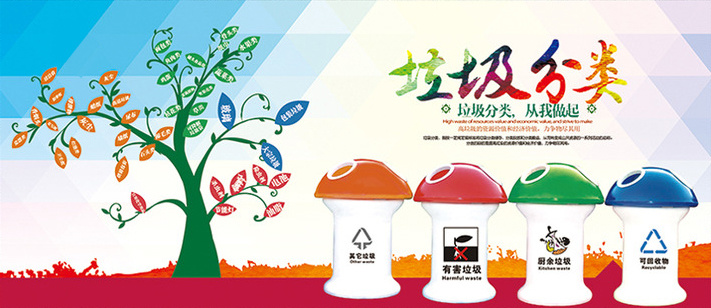
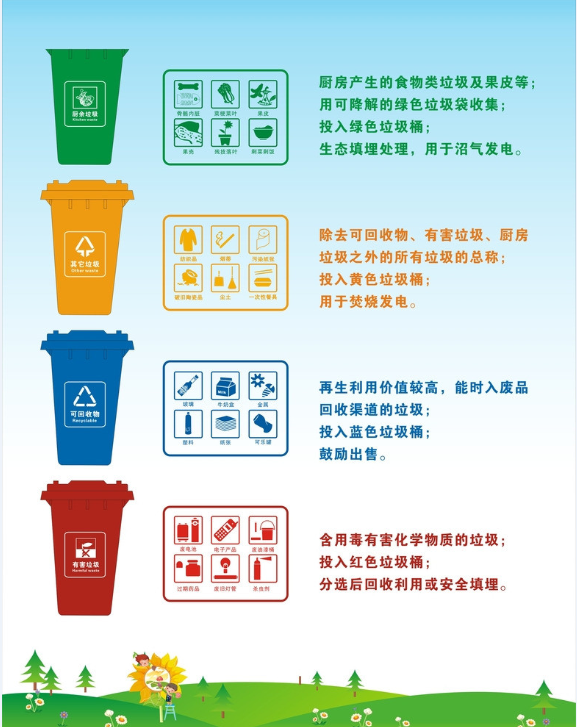
On December 21, 2016, President Xi Jinping pointed out at the 14th meeting of the Central Financial and Economic Leading Group that universally implementing a waste-sorting system is vital to improving the living environment of more than 1.3 billion people and to ensuring that waste is reduced, recycled, and treated in an environmentally sound manner. It is necessary to accelerate the establishment of a waste-management system encompassing sorted disposal, collection, transportation, and treatment, and to develop a waste-sorting framework grounded in the rule of law, driven by the government, supported by public participation, coordinated between urban and rural areas, and tailored to local conditions, with the aim of expanding the coverage of such a system.
On March 5, 2017, Premier Li Keqiang of the State Council stated in his Government Work Report at the Fifth Session of the 12th National People’s Congress that efforts would be intensified to comprehensively improve the urban and rural environment and that a waste-sorting system would be widely implemented. The four characters “waste sorting” once again drew nationwide attention.
On March 18, 2017, the General Office of the State Council forwarded the Implementation Plan for a Domestic Waste Sorting System issued by the National Development and Reform Commission and the Ministry of Housing and Urban–Rural Development (Document No. Guobanfa [2017] No. 26). The plan calls for accelerating the establishment of a waste‑management system encompassing sorted disposal, collection, transportation, and treatment, and for developing a waste‑sorting framework grounded in the rule of law, driven by the government, supported by public participation, coordinated between urban and rural areas, and tailored to local conditions. It seeks to expand the coverage of the waste‑sorting system, regard domestic waste sorting as a key measure for promoting green development, continuously improve urban management and services, and create a high‑quality living environment.
The aforementioned policies appear to provide a robust theoretical foundation for the anti‑incineration camp, and some of their arguments align with national policy—such as prioritizing waste sorting followed by resource recovery. However, resource recovery cannot be idealized: not all waste can be turned into useful products. We must ground our approach in China’s current realities and carefully analyze the composition of domestic waste; certain types of waste simply cannot do without incineration. What we can realistically achieve is to reduce incineration, not eliminate it—especially when it comes to combustible waste, particularly items like toilet paper and sanitary napkins. If these materials are not incinerated, how else are they to be managed? Moreover, their calorific value ranges from 2,000 to 3,500 kcal/kg, three to four times higher than that of raw mixed municipal waste.
Therefore, China’s waste management should follow a path of “pro‑incineration plus anti‑incineration equals pro‑harmony” — namely, waste sorting combined with incineration‑to‑energy. This approach is, in fact, the inevitable direction for China’s waste‑management sector, as even the world’s most advanced waste‑to‑energy technologies are predicated on rigorous source‑separation and sorting.
Taking a waste‑treatment project with a daily processing capacity of 1,000 tons as an example, the total investment for mixed‑waste incineration‑to‑power and for sorted‑waste plus incineration‑to‑power is roughly the same. Mixed‑waste incineration requires two incinerators, whereas the sorted‑waste approach needs only one; the former includes an additional pre‑sorting system, while the latter omits one incinerator—both totaling around RMB 500 million. Based on national average composition, the waste consists of 50% organic matter, 30% combustible material (with a calorific value of 2,000–3,000 kcal/kg), 5% inorganic matter, 10% plastics, 0.5% ferromagnetic materials, and 4.5% furnace ash, sand, soil, and other residues, yielding an average calorific value of 600–800 kcal/kg. A detailed comparison is provided below:
1. For a mixed-waste incineration-to-energy project, the total flue-gas emissions are assumed to be 1,000 cubic meters per day; accordingly, the combined emissions from waste sorting and incineration-to-energy would amount to 300 cubic meters per day (since only 30% of the waste enters the incinerator), yielding significant environmental benefits.
2. The net revenue from incinerating mixed waste for power generation is calculated as follows: local government processing fee + grid‑connection subsidy from the State Grid – operating cost per ton = net profit. For example, assuming a processing fee of 50 yuan per ton, 300 kWh of electricity generated per ton of raw mixed waste, a grid‑connection subsidy of 0.65 yuan per kWh, and an operating cost of 100 yuan per ton:
The net revenue from incinerating mixed waste for power generation is: 1,000 tons × 50 yuan (50,000) + 1,000 tons × 300 kWh × 0.65 yuan (194,000) − 1,000 tons × 100 yuan (100,000) = 144,000 yuan.
The net revenue from sorting and waste-to-energy incineration is calculated as follows: local government processing fees + grid‑connection subsidies from the national power grid + revenue from resource‑recovery products minus operating costs per ton = net income. Specifically, the electricity generated from sorted high‑calorific‑value combustible materials amounts to 1,000 kWh per ton of waste; operating costs for the remaining sorted waste do not exceed RMB 50 per ton; and revenue from resource‑recovery products—comprising organic fertilizer, plastics, ferromagnetic materials, and construction materials—is computed as: (organic fertilizer × price) + (plastics × price) + (ferromagnetic materials × price) + (building bricks × price) − processing costs per ton = net income. Based on an analysis of the waste composition, we obtain: 250 tons of organic fertilizer at RMB 400 per ton, 100 tons of plastics at RMB 500 per ton, 5 tons of ferromagnetic materials at RMB 1,000 per ton, and 100,000 standard bricks at RMB 0.5 per brick, minus the cost of processing 700 tons at RMB 50 per ton, yielding a total of RMB 170,000. (The price of organic fertilizer reflects Jiangsu Province’s subsidy policy, while other components are estimated using the lowest prevailing market prices.) Accordingly, the net revenue from sorting and waste‑to‑energy incineration is: 1,000 tons × RMB 50 per ton (RMB 50,000) + 300 tons × 1,000 kWh × RMB 0.65 per kWh (RMB 194,000) + RMB 170,000 from resource‑recovery products − 300 tons × RMB 100 per ton (RMB 30,000), totaling RMB 374,000.
The net revenue difference between sorted waste-to-energy and mixed-waste incineration is: RMB 374,000 − RMB 144,000 = RMB 230,000. In other words, sorted waste-to-energy generates RMB 230,000 more in daily revenue than mixed-waste incineration, demonstrating a very significant economic benefit.
3. In terms of job creation, incineration of mixed waste generates 100 jobs, with an employment intensity of only 20 jobs per hundred million yuan of investment; in contrast, a combined sorting-and‑incineration‑to‑power system can create at least 300 jobs, yielding an employment intensity of 60 jobs per hundred million yuan of investment.
Thus, it is clear that the key to waste management lies not in whether incineration or anaerobic digestion takes precedence, but in integrated approaches—sorting is what truly matters. However, relying solely on policy mandates or voluntary compliance from residents is likely to prove costly and inefficient, as cultivating environmental awareness is no overnight achievement. Therefore, vigorously advancing mechanized sorting technologies should be the guiding direction for waste‑management development: whoever seizes the technological edge in waste sorting will dominate the entire market.

Latest Updates


Phone:0534-7281652
Fax:0534-7281898
Email:haoyangjituan@126.com
Website:www.haoyanghuanjing.com
Address: No. 1567, Wenhua Street, National High-Tech Industrial Development Zone, Yucheng, Dezhou, Shandong Province
Reporting and Complaint Hotline:0534-7281652
Reporting and Complaint Email:haoyangjituan@126.com

Mobile access

Follow us
Copyright © HaoYang Environmental Co.,Ltd.