

Change from the “core”
Release date:
2017-12-04
Six Sigma management on the shop floor is the best stage for a company to showcase its management capabilities. As one insightful analogy goes: “Every factory’s workshop is like a kitchen—whether the kitchen is clean and well-organized determines whether customers will stay. Our products are like the dishes we serve to our customers; if the kitchen itself is a mess, who would dare eat what we’ve prepared? That would scare away our clients.”
Six Sigma management on the shop floor is the best stage for a company to showcase its management capabilities. As one insightful analogy goes: “Every factory’s workshop is like a kitchen—whether the kitchen is clean and well-organized determines whether customers will stay. Our products are like the dishes we serve to our customers; if the kitchen itself is a mess, who would dare eat what we’ve prepared? That would drive our customers away.”
Since the implementation of 6S management in the workshop, the labeling and organization of machinery, tool racks, and various work platforms, along with clearly defined inspection checklists, operation instructions, process cards, and other documentation, have all been presented in a highly visible and systematic manner. Even the first customer to visit the site can readily grasp the overall picture without needing to ask for clarification, thereby significantly reducing communication barriers and substantially enhancing production efficiency as well as ensuring greater controllability and consistency in product quality.
With the surface-level work completed, the next step is to delve into the heart of the equipment. During the recent shutdown for maintenance on the filament production line, our female workers, working alongside the electricians, undertook a task that went right to the core of the machinery:

This is dust buildup on the wiring inside the distribution cabinet. Since the filament‑spinning line was commissioned, the cables have only been briefly blown clean of surface dust during shutdowns—yet these “power hogs” are downright alarming to think about. Management has emphasized meticulous workmanship and insisted that 6S standards permeate every corner; accordingly, our workshop leadership has resolved to overhaul the distribution cabinets.
Work safety must always be kept in mind. First, electrician Liu Cong switched off all power sources to ensure safe operations. He opened the cable tray in the distribution cabinet, gently pulled out the wires, and used a cloth dampened with alcohol to carefully wipe each wire one by one.

In the recesses of the cable tray, a screwdriver wrapped in a cloth is used to gently dab out the dust. It may seem simple, but it’s actually a major undertaking—buckets of clear water turn black, yet each wire emerges clean. After hours of soaking their hands in water and alcohol, several female workers’ skin has turned pale; some even have cuts from the cable tray edges, yet no one complains.
We pull the wires out and wipe them clean, while Liu Cong carefully straightens each one and returns it to the cable tray.

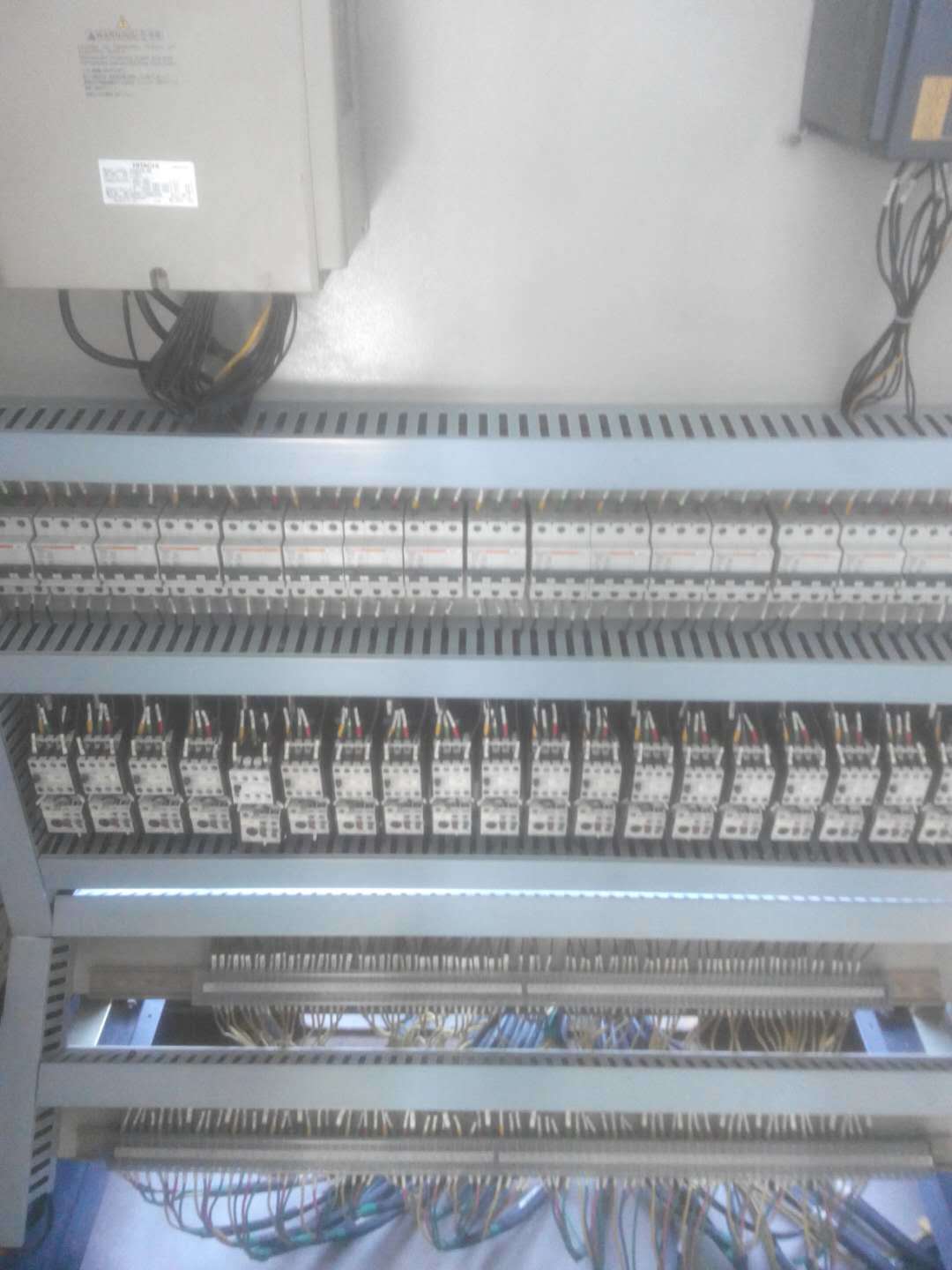
Finally, at the conclusion of the cleaning phase, we labeled all the circuit breakers inside the cabinet with their designated names, putting an end to the previous practice of haphazardly scribbling with a marker.
Looking at the clean and tidy switchgear cabinet, everyone felt a great sense of accomplishment.

Latest Updates


Phone:0534-7281652
Fax:0534-7281898
Email:haoyangjituan@126.com
Website:www.haoyanghuanjing.com
Address: No. 1567, Wenhua Street, National High-Tech Industrial Development Zone, Yucheng, Dezhou, Shandong Province
Reporting and Complaint Hotline:0534-7281652
Reporting and Complaint Email:haoyangjituan@126.com

Mobile access

Follow us
Copyright © HaoYang Environmental Co.,Ltd.