

The development of the geosynthetics industry as reflected in the Government Work Report
Release date:
2017-03-21
Studying and implementing the spirit and substance of the Government Work Report presented at the Two Sessions is not only an important political task but also the fundamental guiding principle for our work. On March 5, 2017, the Fifth Session of the 12th National People’s Congress opened, during which Premier Li Keqiang delivered the Government Work Report. Through a preliminary review of the report, we have identified its key directives regarding technological innovation, research and development, and the promotion and application of geosynthetic materials.
Studying and implementing the spirit and substance of the Government Work Report presented at the Two Sessions is not only an important political task but also the fundamental guiding principle for our work. On March 5, 2017, the Fifth Session of the 12th National People’s Congress opened, during which Premier Li Keqiang delivered the Government Work Report. Based on a preliminary review of the report, we have summarized its key directives pertaining to technological innovation, research and development, and the promotion and application of geosynthetic materials.
I. Innovation-Driven Strategy
Original report text: Lead the transformation and upgrading of the real economy through innovation. Deeply implement the innovation-driven development strategy, promote structural optimization in the real economy, and continuously enhance quality, efficiency, and competitiveness. Continue to advance mass entrepreneurship and innovation…
On June 16, 2015, the General Office of the State Council issued the “Opinions of the State Council on Several Policy Measures for Vigorously Promoting Mass Entrepreneurship and Innovation” (Document No. Guofa [2015] No. 32), which explicitly states: Promoting mass entrepreneurship and innovation is both a source of momentum for development and a path to enriching the people, a means of ensuring fairness, and a strategy for strengthening the country. It holds great significance for advancing economic structural adjustment, building new engines of growth, bolstering new drivers of development, and pursuing a development path driven by innovation.
Under the guidance of innovative policies, the geosynthetics industry has continued to make new strides and achieve sustained development in recent years.
1. New products and innovations are constantly emerging.
In recent years, innovative new products have been developed, including three-dimensional geogrids, polyester fiber fabrics, high-friction‑coefficient textiles and high-strength reinforcement materials, electro‑geosynthetic materials (EKG), and detachable drainage‑filtration units.
In the field of testing technology, new equipment—including large-scale shear testing machines, large-scale ring‑stack pullout testers, large‑scale visual pullout test rigs, an improved large‑scale dual‑purpose direct and simple shear apparatus, temperature‑controlled creep testing machines, and centrifugal model testing facilities—has been continuously developed and put into service, thereby providing robust support for the advancement of geosynthetic products.
2. Technological sophistication has increased, and the number of patents continues to grow.
Geosynthetic materials have evolved from the earlier “import‑and‑imitate” approach to a model that combines “import‑absorption‑re‑innovation” with independent research and development, resulting in continuous improvements in product sophistication, theoretical advancements, and expanding application domains. Certain products have already been exported and have achieved successful field applications.
Taking the filing of national patents as an example, searches were conducted using the keywords “geogrid,” “geotextile,” and “geomembrane,” yielding 534, 404, and 397 patent applications, respectively, with the majority concentrated in the past five years.
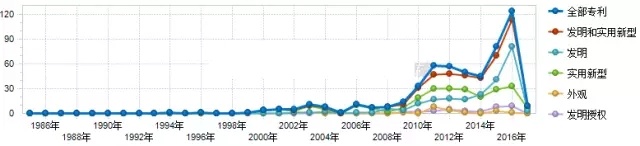
Figure 1: Statistics on the Number of Geogrid Patent Applications

Figure 2: Analysis of the Number of Geogrid Patent Applications in the Past Six Years

Figure 3: Analysis of the Number of Geotextile Patent Applications Over the Past Six Years

Figure 4: Analysis of the Number of Geomembrane Patent Applications Over the Past Six Years
3. Innovative Development of Industry Technical Standards
In recent years, the geosynthetics industry has continuously achieved innovative developments in product variety, specification grades, and application scope. Accordingly, relevant technical standards and specifications have been formulated and updated. The following provides an illustration using the railway and highway sectors as examples.
(1) Compilation and publication of the series of standards for geosynthetic materials in railway engineering
To achieve standardization, regularization, and serialization of geosynthetic products in China’s railway engineering sector, and to unify the relevant technical requirements for these products so as to ensure the quality of railway construction projects, China Railway Corporation has incorporated a series of geosynthetic standards into its corporate standards system. This series comprises nine categories of product standards: geocells, geogrids, geomembranes, geonets, geotextiles and sand‑control materials, drainage materials, waterproofing materials, and thermal insulation materials. All of these standards are scheduled to be finalized and promulgated by 2017.
(2) Addition or revision of relevant content in railway-related technical standards.
In the current and revised technical documents, including the “Code for Design of Railway Subgrades,” the “Code for Design of High-Speed Railways,” the “Code for Design of Intercity Railways,” and the “Code for Design of Retaining Structures for Railway Subgrades,” provisions related to geosynthetic materials have been revised, refined, and supplemented.
(3) Compilation and Revision of the Series of Standards for Geosynthetic Materials in Highway Engineering
To meet the requirements of production, processing, design, and application of new geosynthetic materials, the highway industry has refined and supplemented existing technical standards for geosynthetics to align with the demands of the evolving landscape.
Recently, the Ministry of Transport’s research project, “Study on the Standardization System for Geosynthetic Materials in Highway Engineering and Development of Key Standards,” has passed its review. The project conducted a comprehensive study of the standardization system for geosynthetic materials used in highway engineering, proposed a standardized framework, outlined a three-year plan for the formulation and revision of relevant standards, and completed the drafting of five key product standards. The findings of this research will better support the development and revision of standards and the classification of geosynthetic materials in highway engineering, playing a crucial role in regulating the production and application of such products.
II. Accelerate the research, development, and commercialization of new materials technologies
Original text of the report: Implement the Strategic Plan for the Development of Emerging Industries, accelerate research, development, and commercialization in new materials, artificial intelligence, integrated circuits, biopharmaceuticals, fifth-generation mobile communications, and other fields, and strengthen and expand industrial clusters.
1. On December 28, 2016, the General Office of the State Council issued the “Notice of the General Office of the State Council on the Establishment of the National Leading Group for the Development of the New Materials Industry” (Guobanfa [2016] No. 97). The notice stated that, in order to implement the strategy of building a manufacturing powerhouse and accelerate the development of the new materials industry, the State Council has decided to establish the National Leading Group for the Development of the New Materials Industry.
As a relatively new class of engineering materials, geosynthetics have seen their research and application fields expand continuously in recent years, with steadily increasing technological sophistication. The establishment of the Leading Group for the Development of the Geosynthetics Industry is sure to provide strong impetus to the sector.
2. To foster the growth and strengthening of geosynthetic materials and to develop corresponding industrial clusters, and to effectively enhance China’s production capacity and product quality in this sector while promoting the development and regulatory oversight of the industry, our association has, since the second half of 2016, organized visits and exchanges for key association leaders and enterprise representatives to regions with concentrated geosynthetic manufacturers, including Tai’an, Jining, and Dezhou in Shandong Province, as well as Changzhou in Jiangsu Province.
III. Infrastructure Development
Original report: We will complete railway construction investments totaling 800 billion yuan and road and waterway transport investments of 1.8 trillion yuan, commence construction on an additional 15 major water conservancy projects, and continue to strengthen the development of major infrastructure projects in rail transit, civil aviation, telecommunications, and other sectors. We will also build or upgrade 200,000 kilometers of rural roads.
1. The 13th Five-Year Plan for the Development of a Modern Comprehensive Transportation System
On the afternoon of March 1, 2017, the National Development and Reform Commission and the Ministry of Transport jointly held a press conference to present the “13th Five-Year Plan for the Development of a Modern Comprehensive Transportation System.”
The Plan analyzes the development environment, articulates the guiding principles, and underscores the fundamental tenets of “seamless coordination and convenience, moderate forward planning and openness, innovation-driven progress, and safety and green practices.” It sets a clear target: by 2020, a modern, integrated transportation system that is safe, convenient, efficient, and environmentally friendly will be essentially in place, with certain regions and sectors taking the lead in achieving basic transportation modernization. According to the Plan, during the 13th Five-Year Plan period, total investment in transport will reach RMB 15 trillion, comprising RMB 3.5 trillion for railways, RMB 7.8 trillion for highways, RMB 650 billion for civil aviation, and RMB 500 billion for waterway transport. By the end of the 13th Five-Year Plan, railway operating mileage is expected to increase by approximately 30,000 kilometers, including an additional 11,000 kilometers of high-speed rail; highway mileage will grow by roughly 320,000 kilometers, with about 30,000 kilometers of new expressways; the number of berths capable of handling vessels of 10,000 tons or more will expand by over 300; and the number of civil aviation airports will increase by more than 50.
The “13th Five-Year Plan” for the Development of a Modern Integrated Transport System sets forth the following construction objectives for its networked layout:
(1) Propose the development of a comprehensive transportation corridor network comprising “ten vertical and ten horizontal” routes.
Objective: To span east to west and north to south, ensuring smooth internal connectivity and seamless external links.
Task: Accelerate the implementation of key corridor connectivity and extension projects, and strengthen corridor development in the central, western, and northeastern regions; ensure seamless international connections for domestic comprehensive transport corridors; and plan and construct border‑adjacent corridors encircling China’s land territory.
(2) Optimize the layout of integrated transportation hubs
Includes: international comprehensive transportation hub; national comprehensive transportation hub; regional comprehensive transportation hub; port‑of‑entry hub.
(3) Plan and build the “Three Networks”
Includes: building a high-quality rapid transit network; strengthening an efficient conventional trunk‑line network; and expanding a widely accessible basic service network.
2. Applications of Geosynthetic Materials in the Transportation Sector
Geosynthetic materials, owing to their functions and characteristics, are seeing continuous expansion in terms of application scope, volume, and variety across infrastructure sectors such as transportation. Taking their use in waterway engineering as just one example, the following illustrates this trend:
(1) In breakwaters, sand‑control dikes, and other embankment structures, geosynthetic filter layers can serve as separation layers at interfaces between different materials, primarily functioning to retain soil, permit water flow, and provide a certain degree of resistance to siltation and clogging. In the treatment of soft subgrades, incorporating geosynthetic reinforcement layers can enhance the overall stability of the soft ground; while using sand‑filled bags or plastic drainage boards can accelerate the consolidation of soft soils and increase the bearing capacity of the foundation. Geotextile tube bags filled with granular material can be employed to construct localized structures and artificial reefs.
(2) In revetments and tidal-flat protection structures, geosynthetic materials are commonly employed as facing layers, filter layers, toe protections, and reinforcement layers for the bank‑slope soil.
(3) Among anti-scour structures, geotextile soft mattresses are widely employed as sand‑retaining, permeable bed‑protection systems that can effectively control scour around structures in scour‑prone environments and adapt to topographic variations in the surrounding riverbed.
IV. Building “Sponge Cities”
Original report: Coordinate urban above‑ground and underground development, commence construction of over 2,000 kilometers of urban “underground utility tunnels,” launch a three‑year initiative to eliminate key flood‑prone sections in urban areas, and advance the building of “sponge cities,” ensuring that our cities not only look good on the surface but also perform well beneath it.
1. Construction Objectives and Core Principles
The “Guiding Opinions of the General Office of the State Council on Promoting Sponge City Construction,” issued on October 16, 2015 (Document No. 75 [2015] of the General Office of the State Council), sets forth the following objectives: “…to achieve on-site absorption and utilization of 70% of rainfall. By 2020, more than 20% of the built-up area in urban districts will meet the target requirements; by 2030, more than 80% of the built-up area in urban districts will meet the target requirements.”
“Sponge City” refers to a urban development approach that, through enhanced urban planning, construction, and management, comprehensively implements measures such as infiltration, detention, storage, purification, utilization, and drainage. By fully leveraging the capacity of built environments, road networks, green spaces, water systems, and other ecological systems to absorb, infiltrate, and slowly release rainwater, this approach effectively controls stormwater runoff, achieving natural accumulation, natural infiltration, and natural purification. It helps restore urban aquatic ecosystems, conserve water resources, expand effective investment in public goods, improve the quality of new‑type urbanization, and promote harmonious coexistence between humans and nature.
2. A Brief Analysis of the Role of Geosynthetic Materials in “Sponge City” Construction
The primary functions of geosynthetic materials correspond to the “infiltration, detention, storage, purification, utilization, and drainage” measures required for “sponge city” development, enabling them to contribute in multiple ways. A brief analysis is provided below.
(1) In the construction of green roofs, geosynthetic filter layers, drainage boards, and waterproofing membranes, by performing functions such as filtration, infiltration, and waterproofing, ensure the effectiveness of total stormwater runoff control.
(2) In the construction of “rain gardens, sunken green spaces, ecological detention ponds, infiltration basins, and constructed wetlands,” permeable geotextiles, HDPE corrugated pipes, impermeable membranes, sponge‑type filter‑drainage mats, and nutrient‑rich geotextiles can all play their respective roles.
(3) In the construction of “permeable pavement for roads and plazas,” a composite system integrating permeability and water purification can be achieved through a combination of “grass‑grid pavers” and “sponge‑type filtration and drainage mats”; meanwhile, the “sponge honeycomb system” provides both load‑bearing capacity and greenery.
(4) In other common infrastructure projects, such as infiltration channels, infiltration‑storage systems, and stormwater detention ponds, these can be implemented using plastic modular tanks, geotextiles, and impermeable liners.
V. Cultivating “Chinese Craftsmen”
Original report: Vigorously promote the spirit of craftsmanship, cultivate a robust culture of craftsmanship, uphold professional ethics, champion the pursuit of excellence, nurture a wealth of “Chinese artisans,” build more globally renowned “Chinese brands,” and propel China’s economic development into the era of quality.
In his 2016 Government Work Report, Premier Li Keqiang first introduced the concept of “craftsman spirit,” calling for the cultivation of a commitment to excellence in craftsmanship—expanding product variety, enhancing quality, and building strong brands. Fostering and promoting the craftsman spirit will help translate the new development philosophy of “innovation, coordination, green development, openness, and shared benefits” into concrete action, while also providing a powerful impetus for China’s transformation from a manufacturing giant into a manufacturing powerhouse.
As China’s economy enters a new normal, how to enhance the technological content of products, ensure quality, build strong brands, develop new offerings, and expand from the domestic market to international markets has become a critical issue for all association members. The spirit of craftsmanship holds direct and practical significance for the sustained, healthy development and industrial upgrading of the geosynthetics sector. Taking 2010 as an example, China’s reported consumption of geotextiles alone exceeded 250 million square meters. By major application category, China’s annual production of geosynthetic materials stood at 140,000 tons in 2013 and 145,000 tons in 2014. Clearly, China has long since joined the ranks of leading countries in both the production and application of geosynthetic materials.
In response to the aforementioned requirements, in accordance with the resolution adopted at the first joint meeting of the chairpersons of the ninth session of this association, the Association Secretariat is currently undertaking and preparing to undertake the following tasks.
1. Leverage the platform’s role in information exchange and establish a system of association liaison officers.
To establish a smooth, two-way information‑sharing channel, standardize and strengthen communication between the China Geosynthetics Engineering Association (hereinafter referred to as the “Association”) and its member organizations, fully leverage the Association’s role as a bridge and liaison, better serve its members, promote the sound development of the industry, and institutionalize and standardize the Association’s day-to-day operations, the Association has formulated, in accordance with the relevant provisions of its Articles of Association, the Work Regulations for Association Liaisons (Trial). These regulations are currently being implemented.
2. Establish a working system for the Association’s Industry Guidance Committee.
Mission: To fully leverage the strengths of members of the Industry Steering Committee in geosynthetics and related fields, to provide advice and recommendations for the development and application of China’s geosynthetics industry; to offer guidance for enterprise development; to promote scientific and technological innovation and technical advancement; to standardize market practices and publish benchmark pricing; to foster the sustained, healthy growth of the geosynthetics industry; to advance product performance enhancement and technological upgrading; to strengthen communication and cooperation among enterprises; and to monitor and address unethical market conduct.
Objective: To guide industry development, support enterprise operations, and standardize market conduct, thereby promoting technological advancement, innovation, and growth in the geosynthetic materials sector and its related industries.
3. Assist member organizations in carrying out relevant certification and related activities.
Certification is a comprehensive assessment of enterprise members across design, production, and application, serving as an important means to promote rigorous management and elevate quality standards and technological sophistication. The key certifications involved include: ISO 14001 Environmental Management System Certification, EU CE Certification, Environmental Engineering Qualification, ISO 9001:2000 Quality Management System Certification, National Industrial Product Production License, National Environmental Labeling Certification, CCPC Certification, and CRCC Certification for China Railway products, among others.
4. Promote collaboration among industry, academia, and research institutions, as well as between these entities and end-users.
By fostering collaboration among industry, academia, and research institutions, we assist member organizations in developing and applying new products, technologies, and processes, as well as in filing patent applications and securing proprietary technologies. We have established a comprehensive product development and quality assurance system, along with state-of-the-art applied research facilities, and are transitioning from a purely manufacturing‑oriented model to an integrated service model encompassing production, design, construction, and consulting.
VI. Summary
Through a preliminary study and summary of the Government Work Reports presented at the Two Sessions, and in conjunction with the association’s own work, it is evident that these reports have provided strategic guidance for the development of the geosynthetics industry. Even more crucial than studying the spirit of the Government Work Reports is translating that understanding into concrete actions—advancing the upgrading of the geosynthetics sector and ensuring its sound, sustainable growth, thereby enabling it to play an even greater role in the nation’s development and construction efforts.

Latest Updates


Phone:0534-7281652
Fax:0534-7281898
Email:haoyangjituan@126.com
Website:www.haoyanghuanjing.com
Address: No. 1567, Wenhua Street, National High-Tech Industrial Development Zone, Yucheng, Dezhou, Shandong Province
Reporting and Complaint Hotline:0534-7281652
Reporting and Complaint Email:haoyangjituan@126.com

Mobile access

Follow us
Copyright © HaoYang Environmental Co.,Ltd.